You’ve done everything right.
SPF every morning without fail. A serum that costs more than your dinner out. Eight glasses of water. Sleep. Supplements. The whole routine, stacked neatly on your bathroom shelf like a silent promise.
And yet you look in the mirror on a Tuesday morning and something isn’t adding up. The lines around your eyes and mouth are settling in a little deeper. The glow you remember from a few years ago is not there. You’re not neglecting your skin, but doing more than most people do. So why isn’t it working the way it should?
If you’ve been living in the UAE for any length of time, the answer might be hiding in your biology, and it has a name: GHK-Cu.
What Is GHK-Cu and Why Is Everyone Talking About It in 2026?
GHK-Cu, short for Glycyl-Histidyl-Lysine Copper, is a naturally occurring copper-binding tripeptide. Your body has been producing it since before you were born. It circulates in your plasma, your saliva, your urine. It’s been quietly doing critical work in the background your entire life: signalling your skin cells to produce collagen, accelerating wound healing, modulating inflammation, and keeping your skin’s structural machinery running.
It was first isolated from human plasma by Dr. Loren Pickart back in 1973. The science has been building ever since across dermatology, wound care, hair restoration, and now regenerative medicine. And in 2026, it has become the fastest-growing peptide search term globally, with interest up over 1,000% year-over-year.
That isn’t hype. That’s people catching up to decades of science they weren’t told about.
Here’s the part that matters most: your body’s natural levels of GHK-Cu peak in your twenties at around 200 ng/mL. By the time you’re sixty, those levels have dropped to roughly 80 ng/mL, a decline of more than 60%. And that decline tracks almost perfectly with the moment most people start noticing their skin doesn’t behave the same way it used to.
The Dubai Factor: Why Your Skin Ages Faster Here
This is the conversation most skincare brands skip entirely.
Dubai’s environment is genuinely aggressive on your skin biology. The UV index here sits at extreme levels for most of the year, not just high, but extreme. That sustained solar radiation generates free radicals in the skin at a rate that simply doesn’t happen at most other latitudes. Free radicals break down collagen. They damage the cellular machinery responsible for repair. They accelerate exactly the kind of decline that GHK-Cu is designed to counteract.
Then there’s the air conditioning. You move from scorching outdoor heat into intensely chilled indoor environments dozens of times a day. That constant thermal cycling strips moisture from the skin barrier, compromises its integrity, and leaves it less able to defend itself against the environmental assault waiting outside. Add the low ambient humidity that Dubai sits at for most of the year, and you have a climate that is, in biological terms, actively working against your skin’s ability to stay healthy.
The result? Skin that can look and behave five to ten years older than its chronological age. Not because of poor choices. Because of where you live.
This is why GHK-Cu isn’t just another interesting peptide for people in Dubai. It’s arguably the most relevant one. Because what it does at the cellular level addresses exactly what Dubai’s environment takes away.
What GHK-Cu Actually Does Inside Your Skin
Most skincare ingredients work on the surface. They moisturise the outer layer, fill the appearance of lines temporarily, or create optical effects that photograph well. GHK-Cu does something fundamentally different as it speaks directly to your cells.
It rebuilds collagen from the inside
GHK-Cu activates fibroblasts which are responsible for producing collagen and elastin, the structural proteins that give skin its firmness, bounce, and resilience. Rather than sitting on top of the skin and hoping to seep in, pharmaceutical-grade GHK-Cu works at the dermal level, where collagen is actually manufactured. A controlled clinical trial of 71 women with mild to moderate photo-damage found that twice-daily application of a GHK-Cu cream over twelve weeks produced statistically significant improvements in skin laxity, firmness, clarity, and overall appearance compared to both placebo and a vitamin C control group.
It resets thousands of genes associated with skin aging
A landmark 2014 study published in Organogenesis found that GHK-Cu modulates the expression of more than 4,000 human genes, approximately 31% of the entire human genome, shifting many of them toward patterns associated with younger, healthier tissue. This isn’t a serum claiming to “boost radiance.” This is a molecule that influences the actual instructions your cells are following.
It neutralises the oxidative damage Dubai creates
Copper is an essential cofactor for superoxide dismutase, one of the body’s primary antioxidant enzymes. GHK-Cu acts as a delivery vehicle for bioavailable copper, essentially arming your cells with the tools they need to fight back against free radical damage. In a climate with Dubai’s UV intensity, this anti-oxidative mechanism isn’t a nice-to-have, it’s fundamental.
It resolves inflammation rather than masking it
Chronic low-grade inflammation is one of the most underappreciated drivers of visible skin aging. It quietly degrades collagen, impairs cellular repair, and keeps skin in a reactive state that prevents it from restoring itself. GHK-Cu has been shown to suppress NF-κB inflammatory pathways and reduce pro-inflammatory cytokines, the biological signals that keep that cycle running. Clinical research has even explored GHK-Cu as a potential alternative to corticosteroids for inflammatory skin conditions, given its ability to calm the skin without the side-effect profile of steroid-based treatments.
It supports the skin barrier against environmental attack
A compromised skin barrier is the root cause of a long list of problems like dehydration, sensitivity, dullness, uneven texture, accelerated aging. GHK-Cu supports the keratinocytes responsible for maintaining barrier integrity, helping the skin hold moisture, defend against pollutants, and recover more effectively from the daily environmental stress of living in the UAE.
Topical Serums vs. Clinical Peptide Therapy: The Honest Difference
Here is something that skincare marketing does not want you to know.
Most over-the-counter GHK-Cu serums contain concentrations far below what was used in clinical trials. The research that produced those impressive results like 32.8% reduction in wrinkle depth, 20–30% improvement in skin firmness, was conducted with pharmaceutical-grade concentrations delivered under controlled conditions. The drop-in-a-bottle serum from the pharmacy shelf is not operating in the same range.
There is also the question of penetration. For topical GHK-Cu to produce meaningful effects at the dermal level, where collagen is actually made, it needs both the right concentration and a formulation designed for genuine skin penetration. Many mass-market products use trace amounts of the peptide, just enough to list it on the label, in bases that aren’t designed to carry it past the outer skin layers.
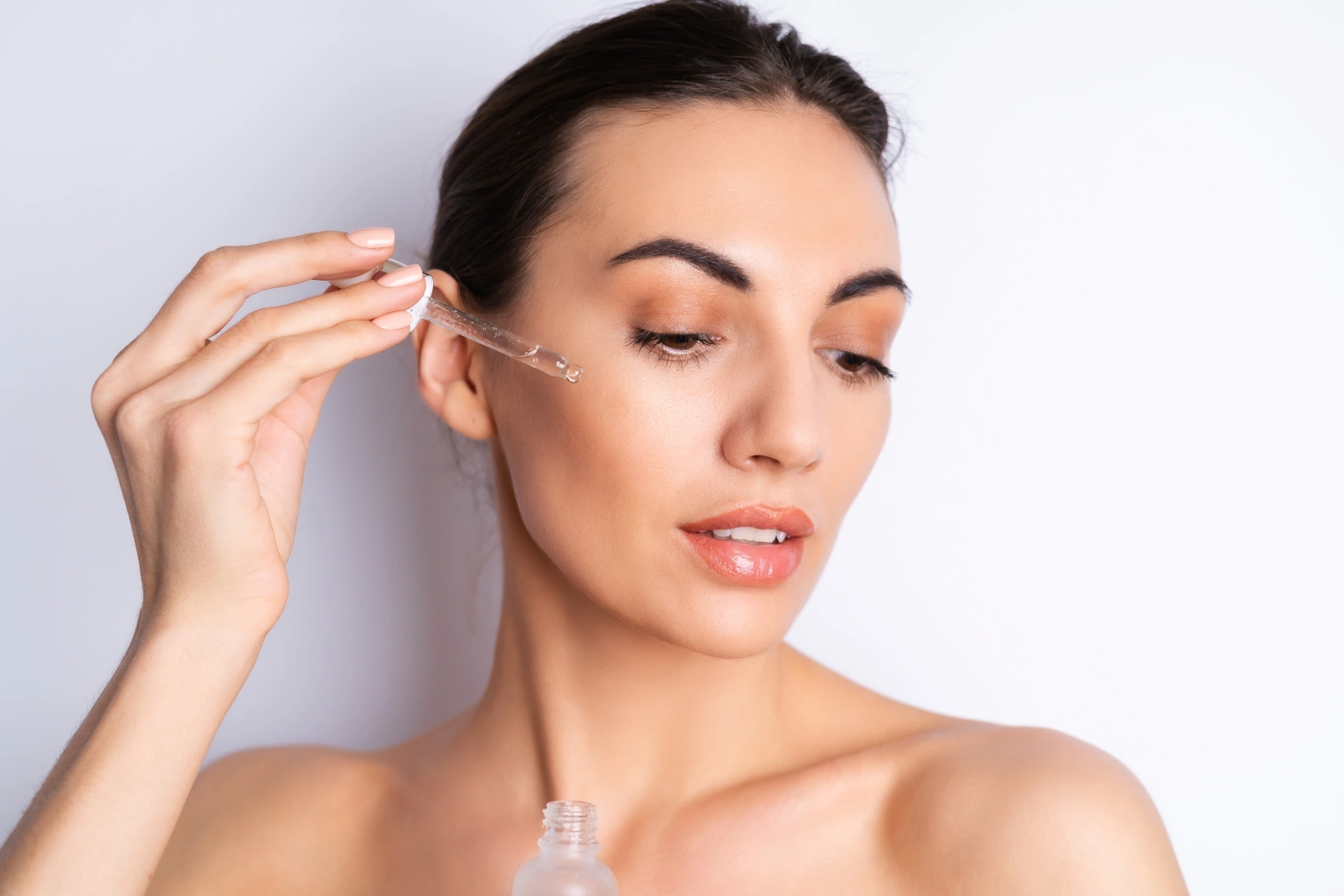
Injectable clinical GHK-Cu bypasses all of this. Delivered subcutaneously under medical supervision, it produces systemic effects that topical products simply cannot replicate. Research data puts the collagen density improvement for injectable protocols at 15–25% over 12–16 weeks — two to three times greater than what well-formulated topical products achieve. And systemic delivery means the benefits extend beyond the face to include the neck, chest, hands, and scalp,the areas that topical products rarely reach effectively.
None of this means topical GHK-Cu products have no value. The best formulated ones, used consistently, do produce real improvements. But if your skin concerns are meaningful, if you’re dealing with significant collagen loss, Dubai-accelerated photo-damage, loss of firmness, or persistent inflammatory skin conditions, a pharmaceutical-grade clinical protocol delivers results at a completely different level.
Who Is GHK-Cu Right For in the UAE?
GHK-Cu therapy tends to produce the most meaningful outcomes for people who recognise one or more of these situations:
- You’re in your mid-30s to 50s and noticing the first real signs of structural change. Not surface dryness, actual loss of volume, the kind of skin density that serums can’t restore. This is the window where rebuilding the collagen foundation has the highest return.
- Your skin has been accelerated by Dubai’s climate. If your skin looks or behaves older than your age, particularly around the eyes, jaw, and neck, oxidative photo-damage is often the primary driver. GHK-Cu directly addresses this.
- You’ve tried quality skincare products consistently and hit a ceiling. The surface-level approach has done what it can. Clinical peptide therapy works at the layer beneath.
- You’re recovering from a skin procedure like laser treatment, micro-needling, and want to accelerate and optimize healing. GHK-Cu’s wound-healing mechanisms make it one of the most effective post-procedure recovery tools available.
- You want a non-surgical, medically supervised approach to skin health. No downtime. No injectables that freeze your face. A protocol that works with your biology rather than overriding it.
The ReMed Approach: Diagnostics First, Always
At ReMed Medical Dubai, we don’t believe in prescribing peptides before we understand what your body actually needs.
Every GHK-Cu protocol at our clinic begins with a comprehensive assessment, which starts with Advanced Biofeedback Analysis, Oligoscan to map your cellular mineral and heavy metal status, and full blood work. These diagnostics tell us things that a skin consultation alone never can: your inflammatory load, your oxidative stress markers, your nutritional deficiencies, your hormonal baseline.
Why does this matter for a skin peptide? Because GHK-Cu doesn’t work in isolation. Copper metabolism, antioxidant capacity, inflammatory status, and hormonal balance all influence how effectively your body will respond to the protocol. We build your treatment around what your biology is actually telling us, not around a generic dosing schedule.
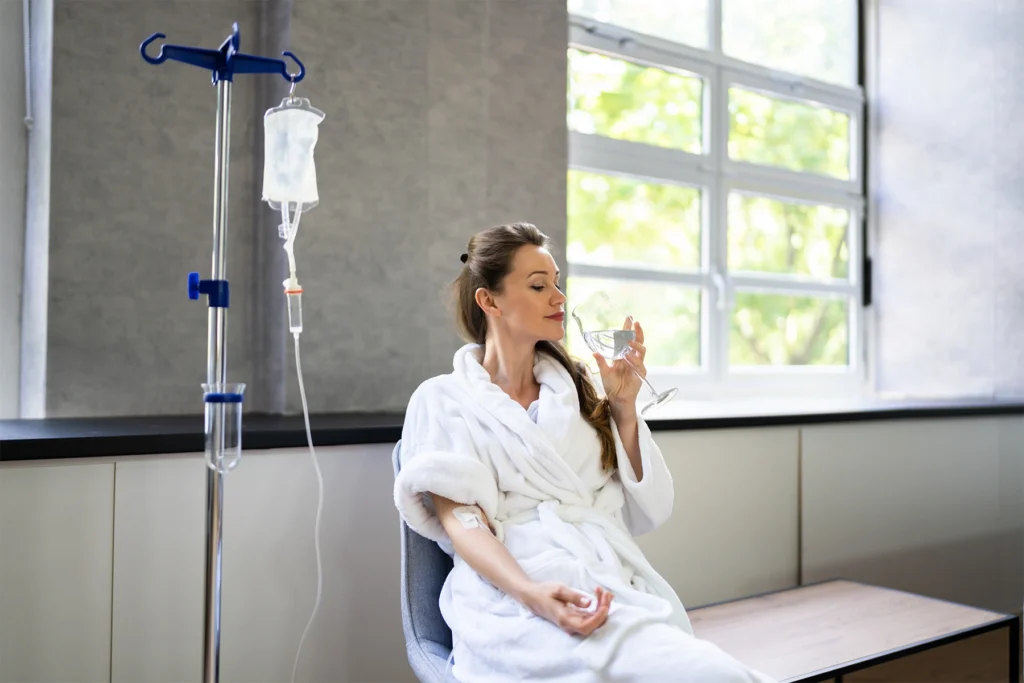
Your GHK-Cu protocol at ReMed may be administered via subcutaneous injection, topical pharmaceutical-grade preparation, or a combination of both depending on your diagnostic results, your skin concerns, and your lifestyle. It may also be integrated with our broader Skin Program, with IV Drips designed to support collagen synthesis and antioxidant defence, or with other regenerative treatments where your clinical picture indicates benefit.
The goal is never to treat a symptom. It’s to restore the conditions under which your skin can do what it was designed to do.
This is what we mean when we say your health isn’t just restored, it’s redefined.
Frequently Asked Questions
How long before I see results from GHK-Cu therapy?
Clinical protocols typically show measurable improvements in skin firmness and texture within 6–8 weeks. Full collagen remodelling takes 12–16 weeks for the most significant changes. Unlike aesthetic procedures, the results develop gradually because they are built on actual tissue restoration.
Is GHK-Cu therapy safe?
GHK-Cu has one of the strongest safety records of any therapeutic peptide. It is a tripeptide your body already produces naturally. Side effects are uncommon and typically limited to mild, transient redness or sensitivity at the injection site. At ReMed, every protocol is supervised by a licensed regenerative medicine physician, preceded by comprehensive diagnostics, and monitored throughout with regular biomarker tracking.
Can I use GHK-Cu alongside my existing skincare routine?
In most cases, yes. Your ReMed physician will review your current routine and make specific recommendations. GHK-Cu is generally compatible with retinoids, hyaluronic acid, and most active skincare ingredients, though the sequencing and timing matter. We provide detailed guidance as part of your protocol.
What makes ReMed’s GHK-Cu therapy different from other clinics in Dubai?
The diagnostics-first approach. We do not prescribe peptide therapy based on a skin consultation alone. Every protocol is built on Biofeedback Analysis, Oligoscan, and full blood work, meaning your GHK-Cu treatment is calibrated to your specific biological needs, not to a standard template. We are also a DHA-licensed regenerative medicine clinic, which means our protocols meet the regulatory and safety standards required for medical-grade peptide therapy in the UAE.
Ready to Find Out What Your Skin Actually Needs?
If you’ve read this far, you’re probably someone who takes their health seriously. You understand that skin health isn’t cosmetic, it’s a reflection of what’s happening at the cellular level. And you’re ready to move beyond surface-level solutions.
Your first step is a consultation with our regenerative medicine team. We’ll review your health history, discuss your skin concerns and goals, and map out whether GHK-Cu therapy, alone or as part of a broader regenerative protocol is the right direction for you.
There’s no generic treatment plan waiting at the end of that conversation. There’s a diagnostic process that starts with understanding your biology, and a protocol built entirely around what it shows.